Pre-order status

Batch 1Kickstarter · sold out
Batch 2Pre-order · ships Sep 2026
2,200Kickstarter backers
3,812%funded
Project We LoveKickstarter
HapeManufactured with Hape
[Award slot]GEE Learning 2026 — confirm before use
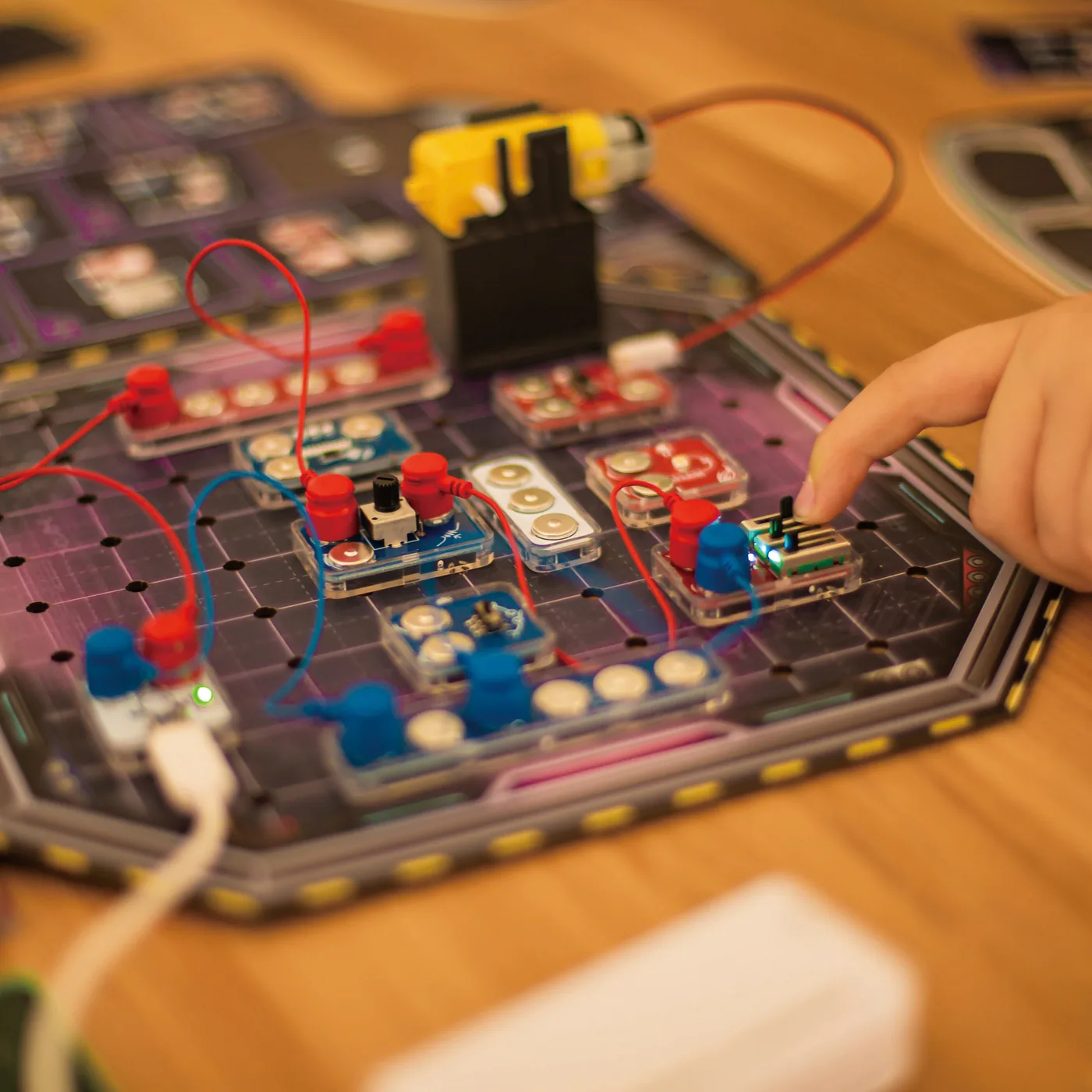
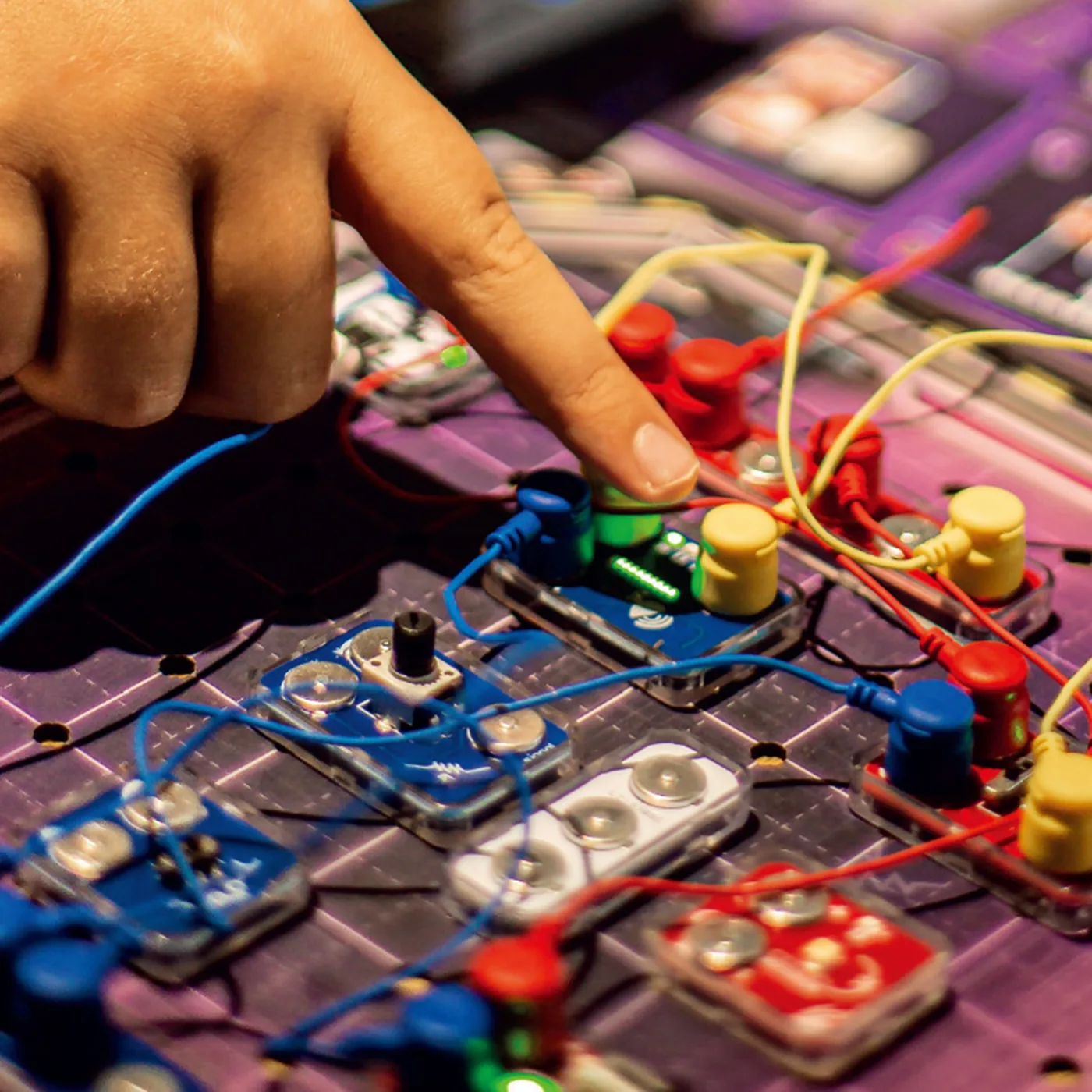
Hands building a circuit on the lit game board
the game

You are the engineer. The reactor is failing. The circuit has to be real.

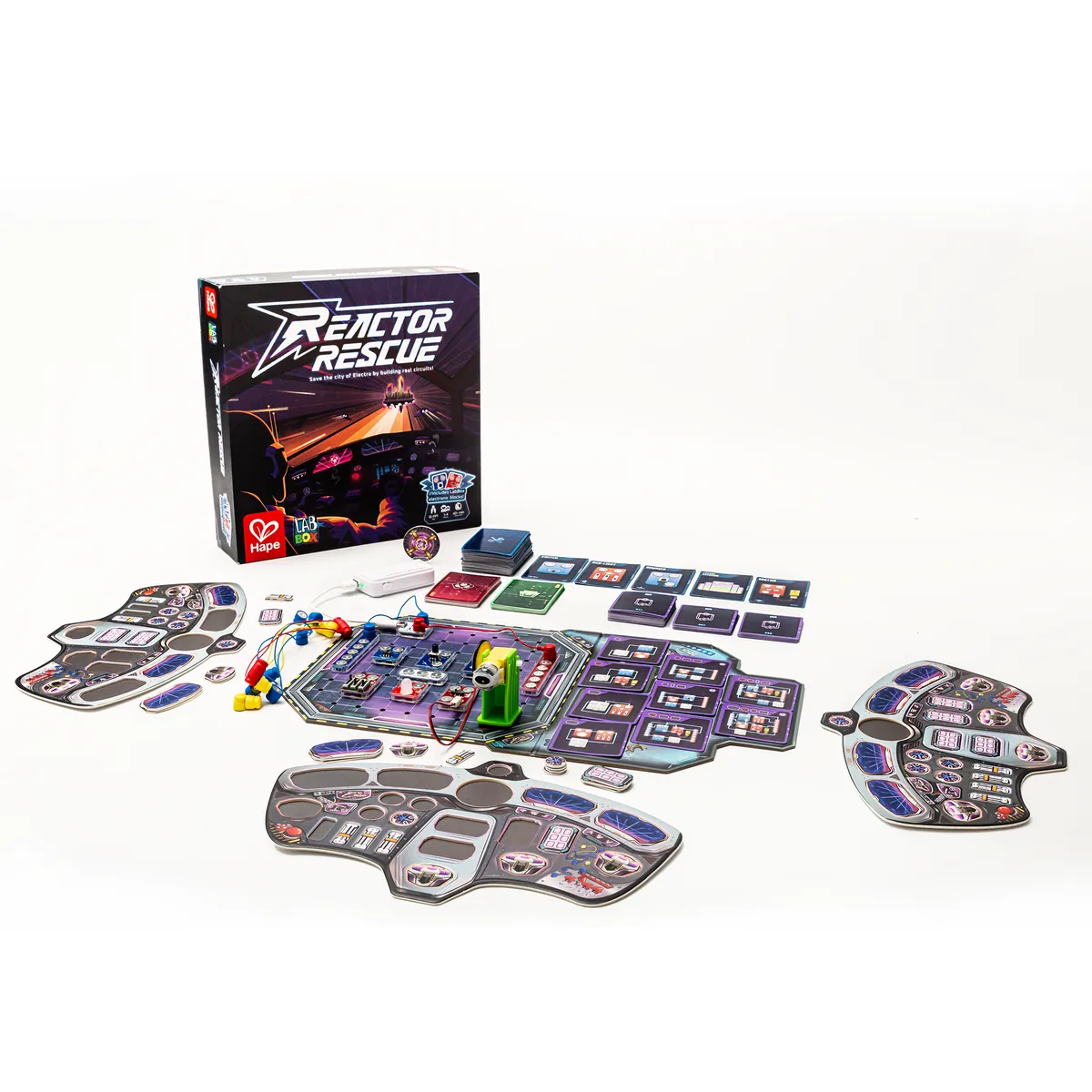
The floating city of Electra is dark. A meteoroid storm has crippled your spacecraft — motors, lights, sensors, switches and dimmers are all down. Players are space engineers racing to repair their ship: draw a blueprint, collect the resources, and wire the real electronic circuit against a two-minute clock.

If the light comes on, it works — and you earn repair tokens. Fail, and you retry with a malfunction risk. The first engineer to fully repair their spacecraft claims the Reactor Token and wins.

Every decision matters, every build is real, and every game unfolds differently.

1–4players
10+ages
3game modes

“Reactor Rescue is already one of the most intriguing projects this spring.”

Matthew Smail · Big Boss Battle
video reviews

Reviewers who played it

This board game makes you build REAL circuits?!
This board game makes you build REAL circuits?!Tantrum House · YouTube review
Reactor Rescue — Dice Tower preview with Mark Streed
Reactor Rescue — Dice Tower preview with Mark StreedThe Dice Tower · YouTube review
Repair your ship! Complete the circuit!
Repair your ship! Complete the circuit!BoardGameCo · YouTube review
Use real electronic circuits in a game!
Use real electronic circuits in a game!Game Boy Geek · YouTube review
meet reactor rescue

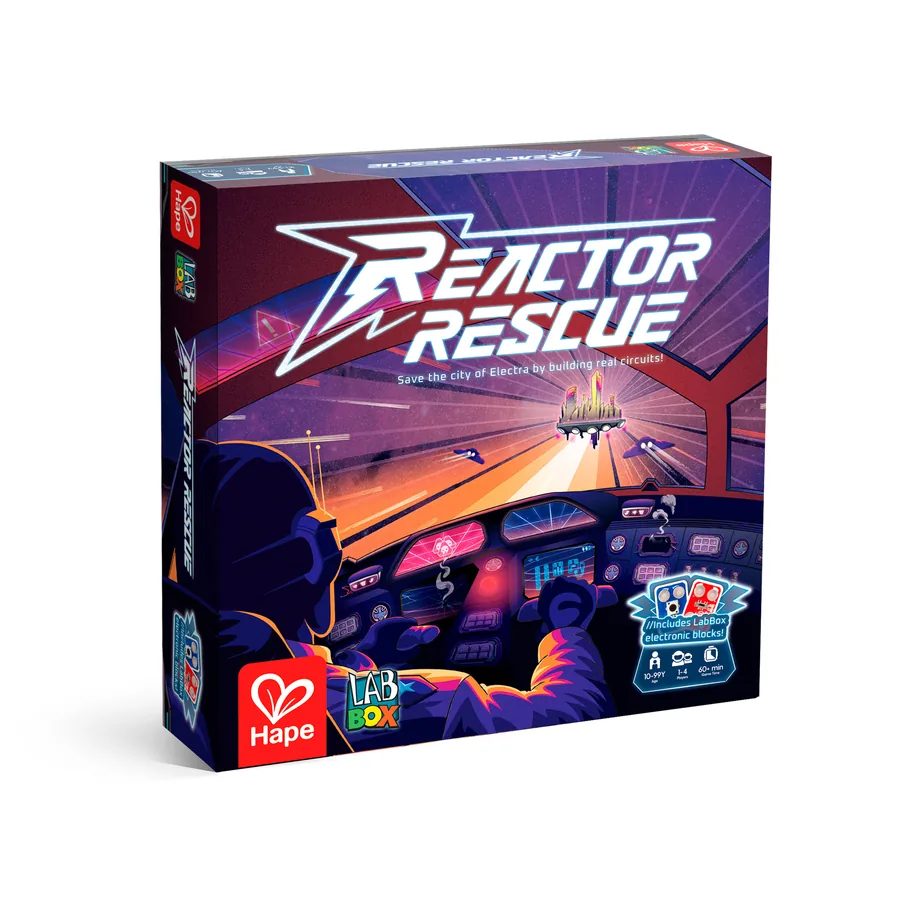
The board game where the circuits are real

A strategy game families actually finish — and a circuits lesson nobody notices they're having. Manufactured with Hape; born on Kickstarter with 2,200 backers.
Manufactured with HapeKickstarter · Project We Love
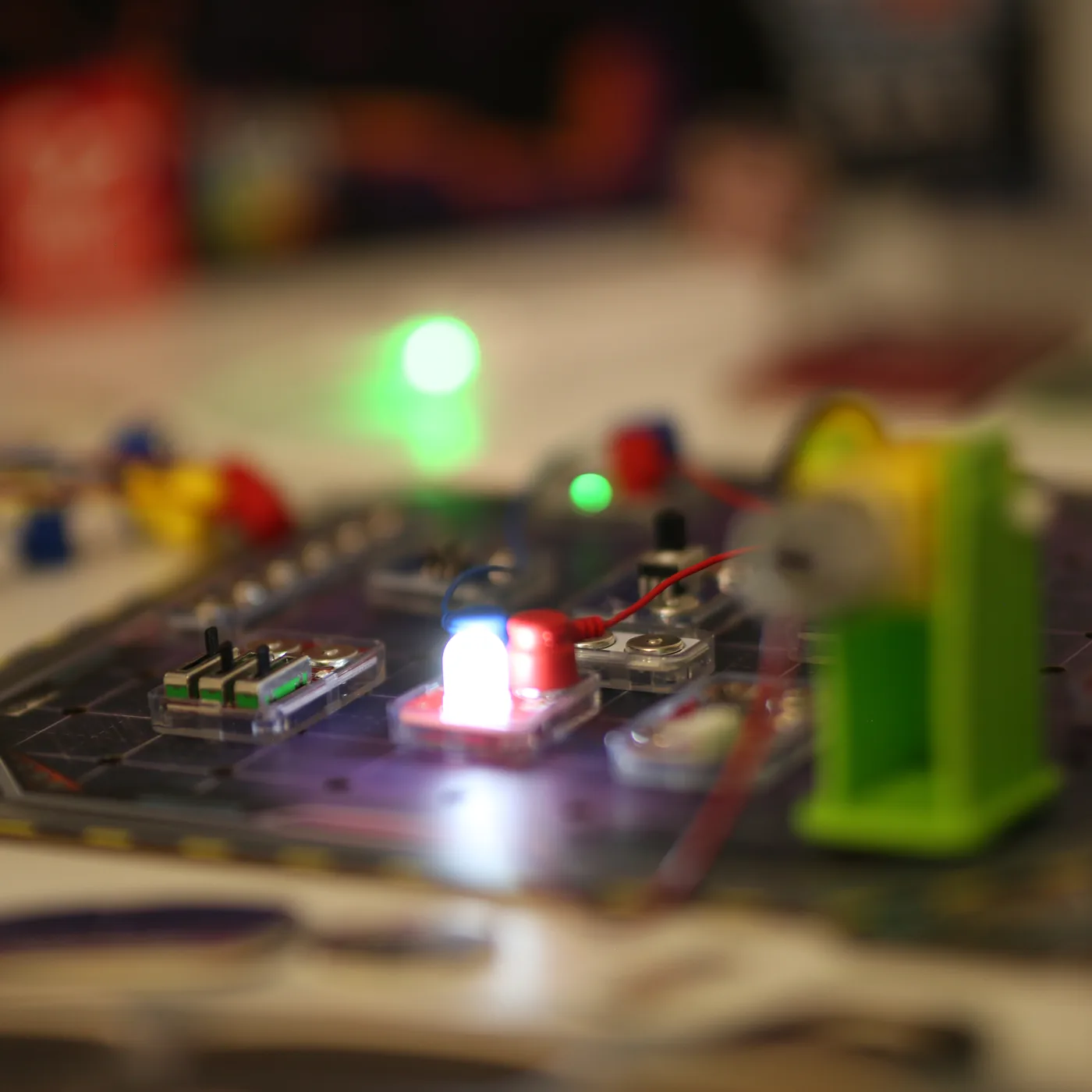
The Reactor Rescue board at night, circuit LEDs lit

The circuits are real. The victory is real.

how to play

Three steps a turn

1
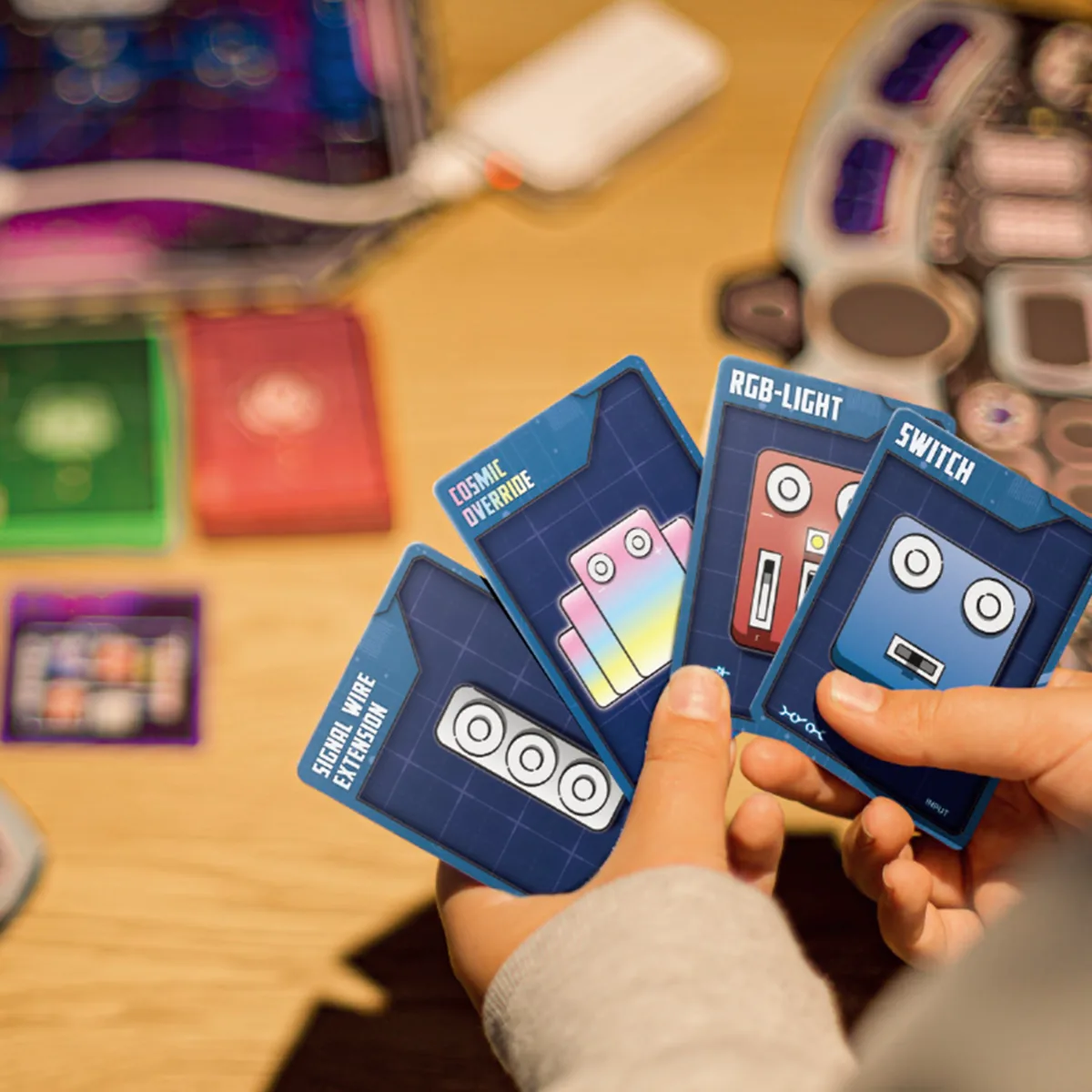
A player holding a hand of Reactor Rescue cards
Draw 2 resource cards — or take a challengeStockpile parts, or gamble a turn on a blueprint.
2
Hands snapping blocks into a circuit on the game board
Build the real circuit in two minutesSnap the blocks. If the light comes on, it works.
3
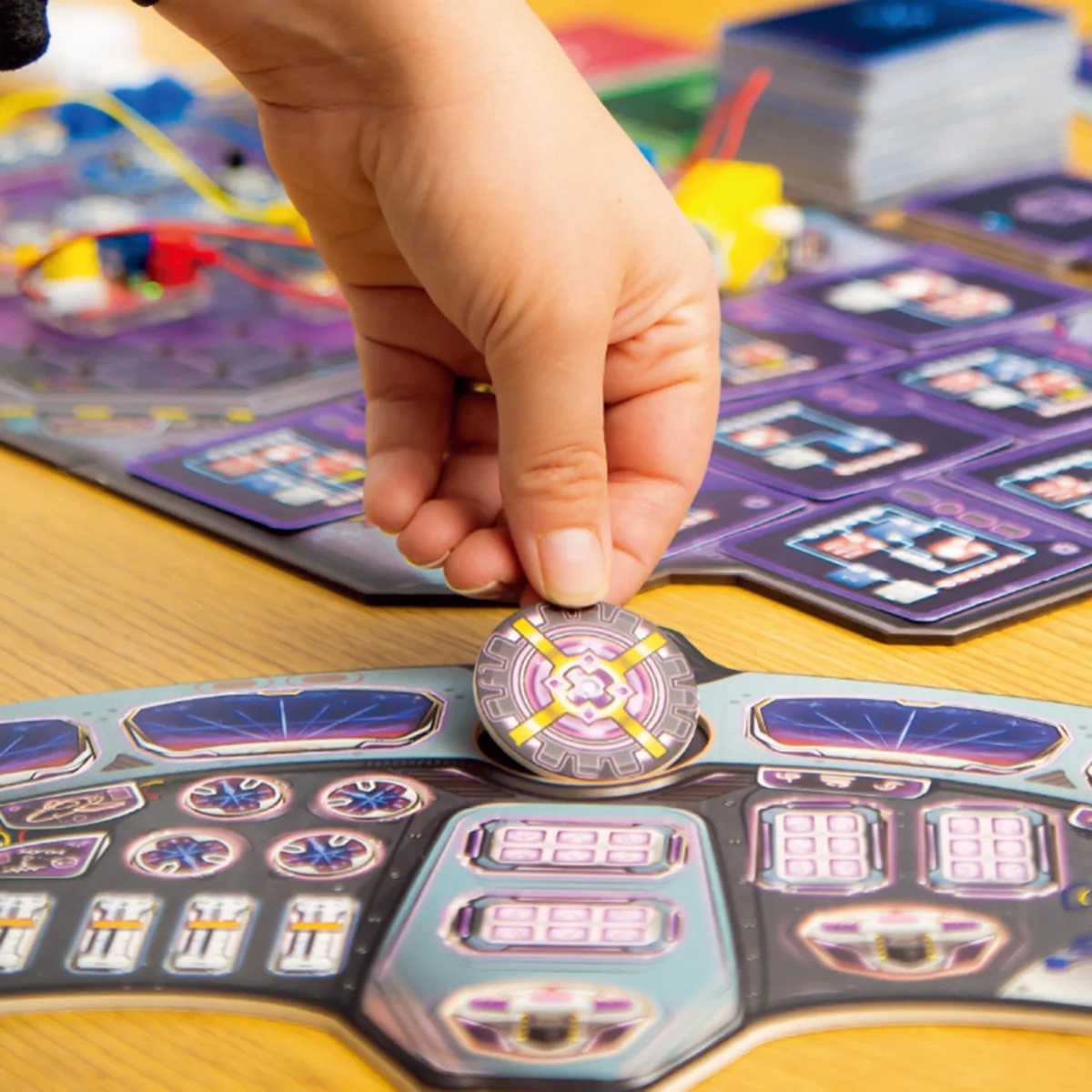
A repair token being placed on a spacecraft control panel
Earn repair tokens, reboot the reactorFail and you retry — with a malfunction risk.
Honest note: the rules take one full game to click. The video gets you most of the way.
feature highlights
The Reactor Rescue board at night, circuit LEDs lit

The motor spins. The light glows.

Nothing is simulated. When your blueprint is wired right, the LED lights, the buzzer sounds, the motor turns — on the table, in front of everyone. That is the win condition, and it is impossible to fake.

A hand of Reactor Rescue gameplay cards

Strategic depth, and a different game every time

138 circuit challenge cards across three difficulty levels, 112 gameplay cards of resources, events and malfunctions, and three modes — Learning, Circuit Specialist and Solo. A 10-year-old and a 45-year-old play as equals because the circuit doesn't care who you are.
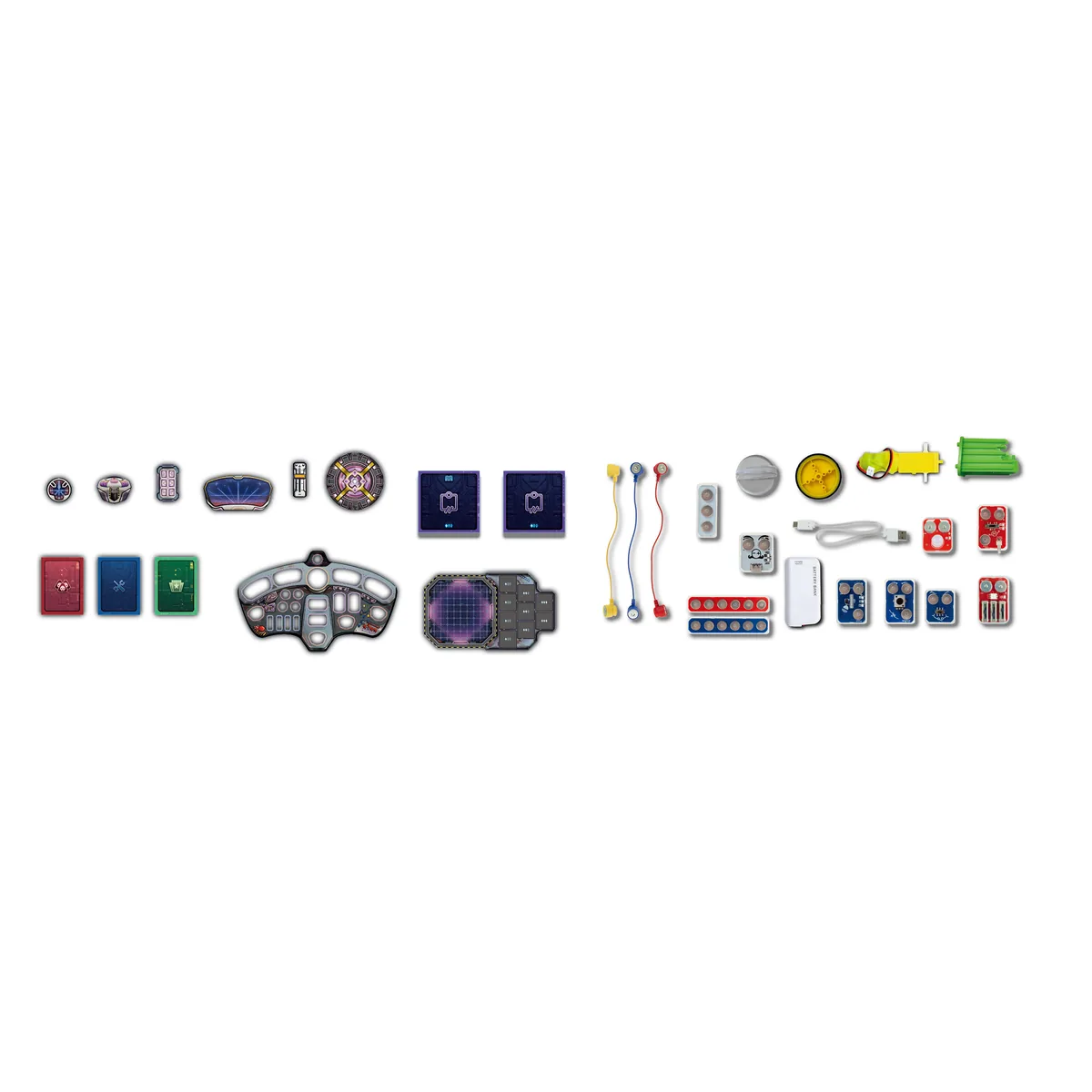
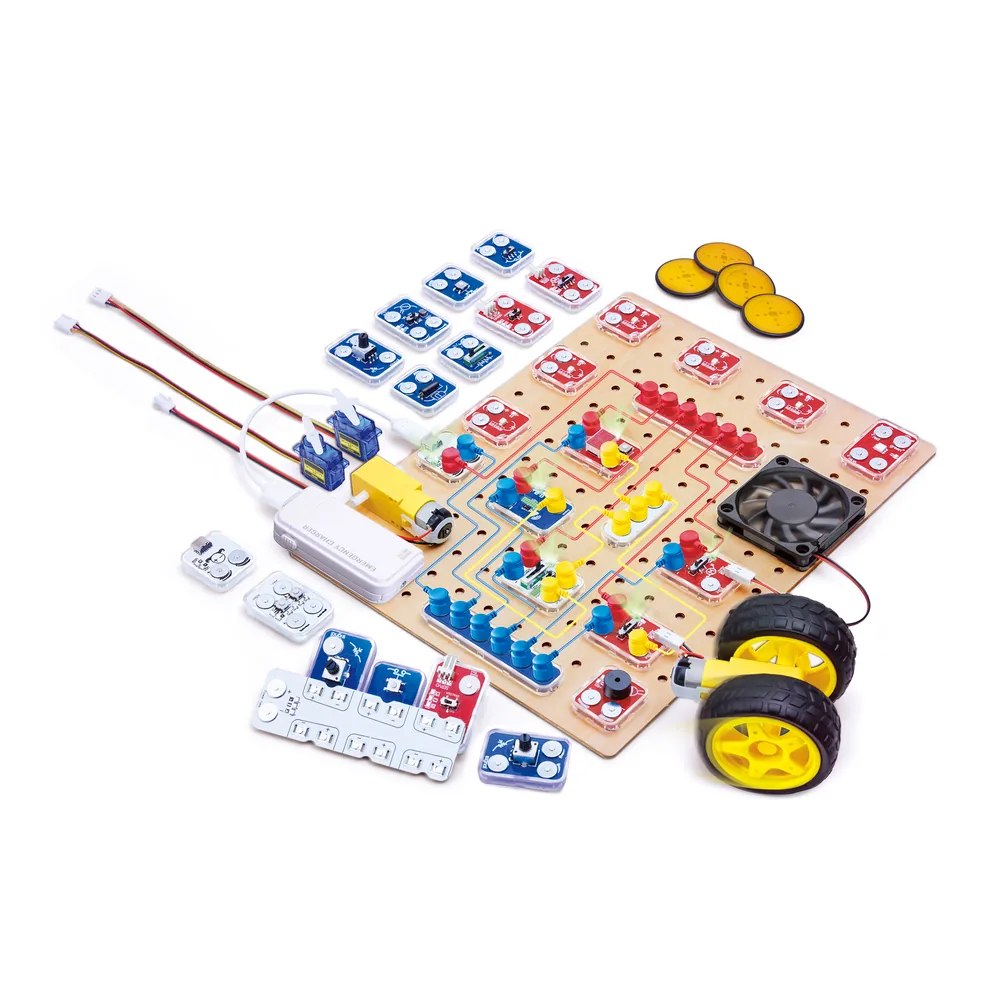
The ten Labbox electronic blocks included in the game

Labbox technology — safe by design

Magnetic connectors snap on with a click and can't be forced the wrong way round; polarity marks show the direction; every component is protected, so a wrong circuit can't damage a block or a finger. No soldering, no tools, no exposed contacts.

Hands building a circuit on the lit game board

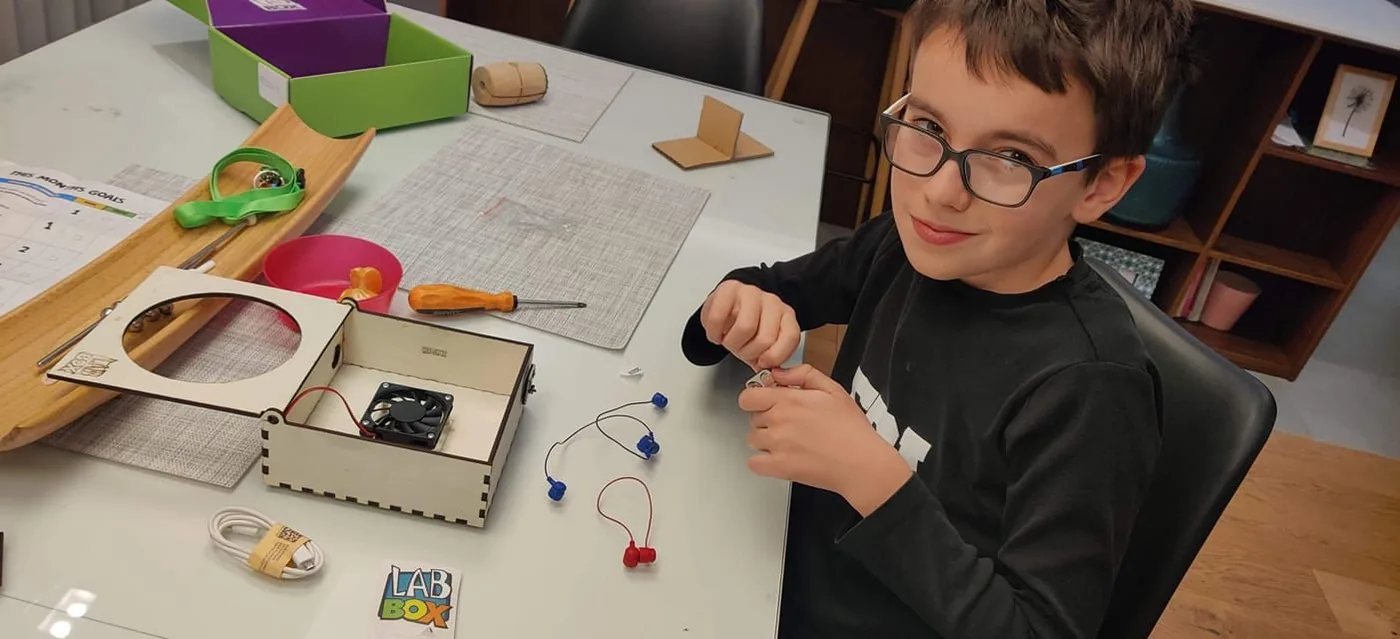
Engineering thinking, without a lesson

Series and parallel circuits, switches, sensors and resistance — the same concepts as the science curriculum, learned by needing them to win. And when a build fails, players debug it under the clock: the actual engineering skill.

what's in the box

Everything you need to play, in three game modes
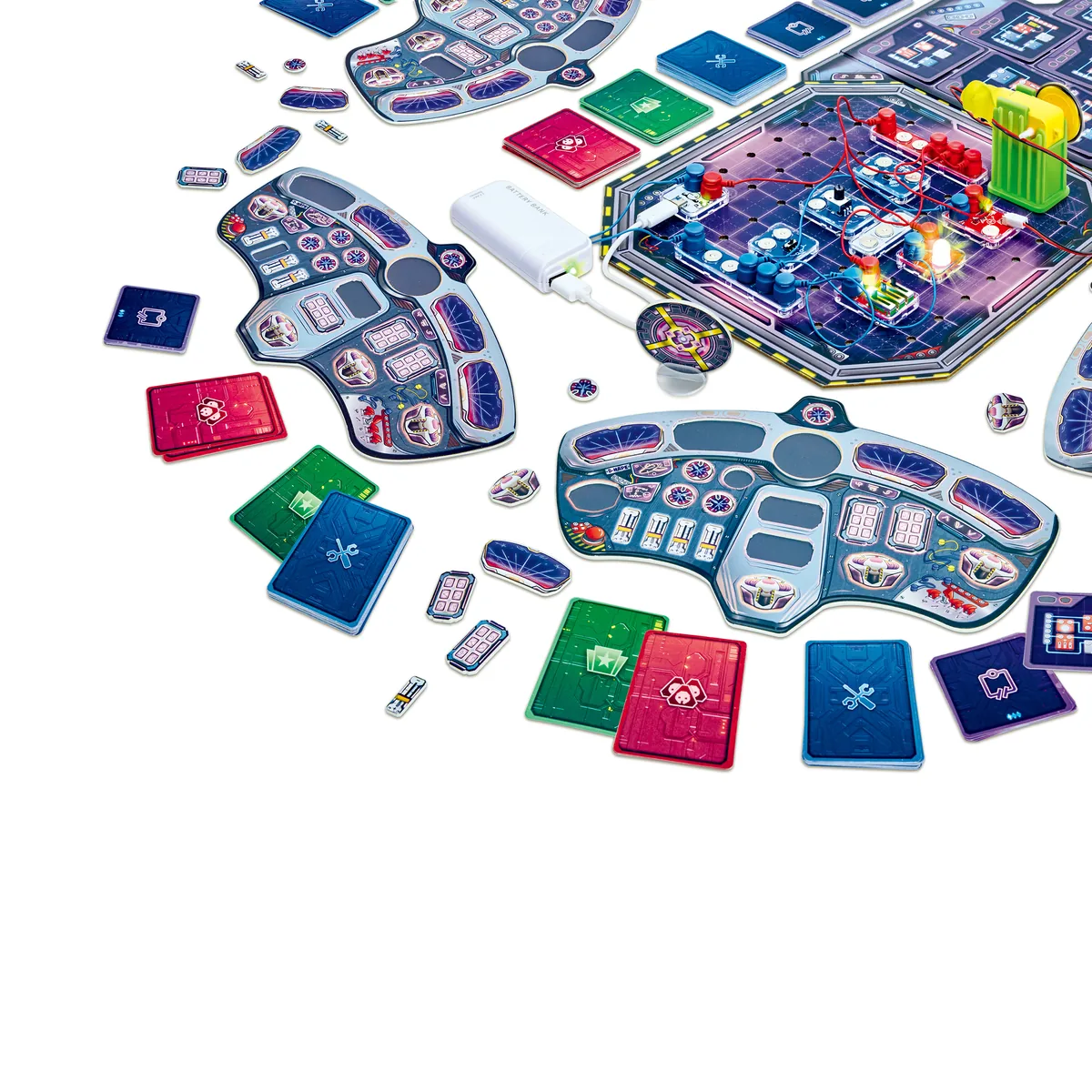
The four Reactor Rescue spacecraft control panels
4×Spacecraft control panels
A repair token being placed on a control panel
85+Repair tokens
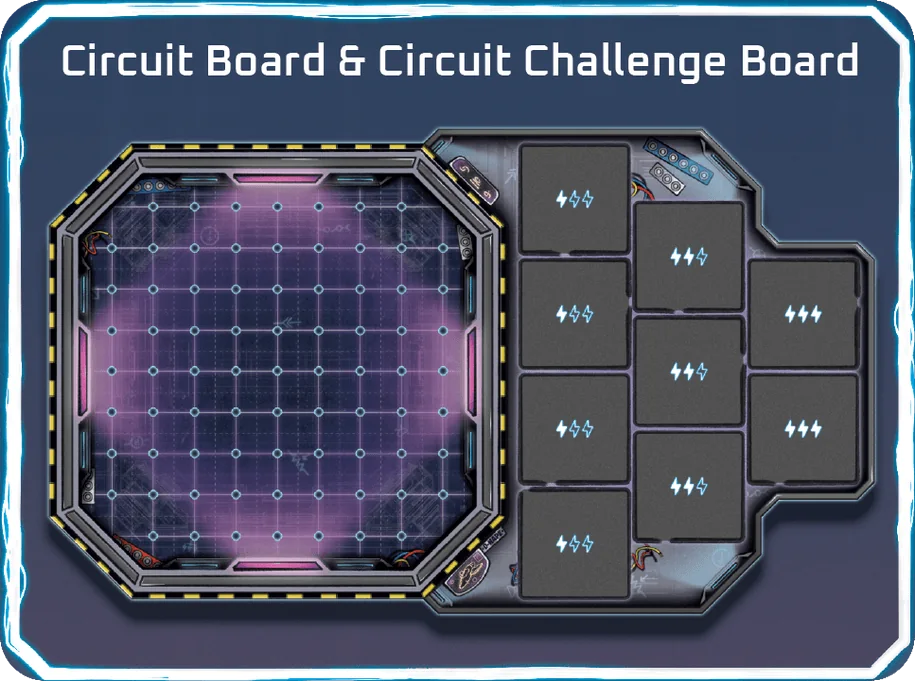
The Reactor Rescue circuit board and challenge board
1×Circuit board
The ten Labbox electronic blocks included in the game
10×Labbox electronic blocks · work with every kit
A magnetic snap-connect wire
10×Magnetic snap-connect wires
A hand of Reactor Rescue gameplay cards
112×Gameplay cards · resource, event, malfunction
Reactor Rescue box with the challenge cards laid out
138×Circuit challenge cards · 3 difficulty levels
1×Rulebook
backers

2,200 families said yes to Reactor Rescue

★★★★★

[Testimonial slot — parent, equal-footing play]

[First name] · parent · child aged [N]
★★★★★

[Testimonial slot — Kickstarter backer]

[First name] · backer
★★★★★

[Testimonial slot — teacher or club leader]

[First name] · educator
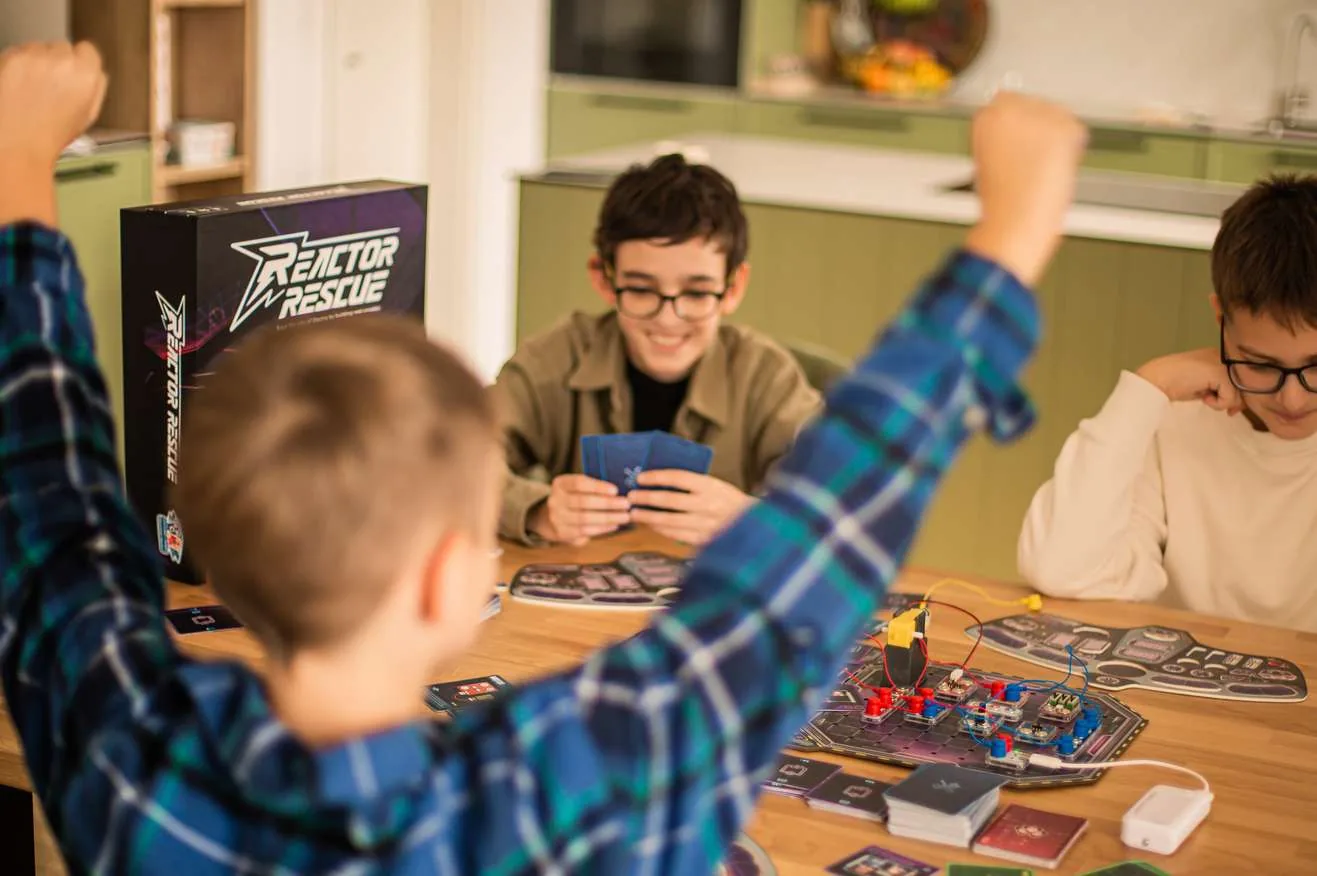
Players around a table mid-game of Reactor Rescue
The Labbox team at work
about labbox

From classrooms to your table

Labbox was started by sisters Arta and Fiona Shehu, computer-science engineers who taught thousands of students at jCoders Academy — and kept seeing the same thing: a circuit only clicks when it is real. Not simulated, not on a screen. Something has to light up.

The blocks came first: 30+ magnetic electronic components that snap together with polarity marks and protected parts, so a wrong build can't hurt anyone or anything. The kits and games grew out of them, co-developed and manufactured with Hape, one of the world's largest educational-toy makers. Labbox is based in Frankfurt and ships across nine European countries.

faq

Frequently asked questions

Is it a real board game or an educational toy?
A real, competitive strategy board game — engine-building, resource cards, sabotage, a timer. The education is a side effect of needing the circuit to work.
Is 10+ a hard rule?
Reading fluency for the cards and patience for the timer are what set it. From 8, play as a team with a grown-up — or start with Buzz Trace or Circuit Explorer Base instead. We'd rather say so than take the return.
How long does a game take?
Learning Mode plays in about 30–40 minutes; Circuit Specialist runs longer. Honest note: the rules take one full game to click — the how-to-play video gets you most of the way.
How many players?
1–4. Solo mode is you against the reactor's countdown, and doubles as the best practice mode for family game night.
Do I need to know anything about electronics?
No. The first blueprint is a light and a switch. The challenge cards climb three difficulty levels, and every block is marked so a wrong build can't hurt anything.
Which language is the game in?
Choose EN, DE, ES, FR or IT in the buy box — one product, five manuals and card sets, not five products.
Does it need batteries?
The battery block encloses its cells with no exposed contacts. [Battery type and whether they're included — confirm from the final SKU.]
Do the blocks work outside the game?
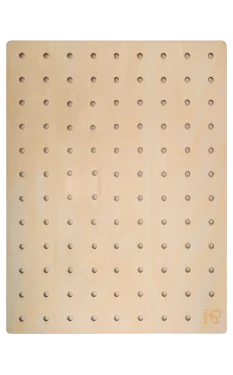
Yes — they're standard Labbox blocks, compatible with every kit. The Explorer Edition adds a wooden board and 4 wires precisely for building beyond the game.
What's the two-minute timer for?
Every circuit in the game is built against it. It's what turns a wiring exercise into a race — and what makes the light coming on feel like a win.
Will we play it more than twice?
138 challenges across three levels, three modes and malfunction cards mean no two games are the same. Then the blocks go on to work in every kit.

Save the city of Electra by building real circuits

Pre-order now · free shipping · 30-day returns

Pre-order · €99
Search Labbox